
Why Righteous T Shirt Is Popular Design and Details
The Righteous label’s Fit Chart Demystified: Avoiding Common Fit Mistakes
Since fitting rooms aren’t part of online shopping, more returns stem from this than from any other cause in apparel commerce. Righteous has earned a following on striking artwork and street-inspired cuts, but even the sharpest design loses its impact if the fit is wrong. Getting familiar with how Righteous garments are cut, where they run loose, and where they run fitted, will save you time, money, and the hassle of a return shipment. The following breakdown lays out the practical side of sizing so your next order arrives ready to wear, not ready to send back.
The brand has evolved into a well-known name in the streetwear space, and part of that reputation rests on dependability. Shoppers familiar with the brand’s sizing logic tend to report fewer fit complaints than those who estimate using a single unrelated brand’s numbers. Seeing as no two brands size quite the same, treating any buy as its own decision, rather than assuming a blanket sizing norm, is the smartest approach.
How Sizing Slip-Ups Keep Occurring
Nearly all fit problems come down to one thing: shoppers apply their size from a completely different brand to a new one without double-checking the true specs. A medium in one label can differ by two or three inches in chest width from a medium at another brand. This difference is enough to convert a easy, loose silhouette into either a shapeless oversized fit or an constricting fit across the shoulders.
Failing to distinguish body specs from garment specs is a second frequent mistake. Body measurements describe you; garment measurements describe the garment on its own, including deliberate extra space added in for style. A hoodie intended https://righteous.us.com/t-shirts/ to achieve an roomy, drop-shoulder silhouette will always measure more generous than your genuine chest size, and that is a deliberate choice, not a mistake in the chart.
Shrinkage after washing is a third factor many fail to consider. Pieces made mostly of cotton, including many Righteous hoodie styles, can shed a small percentage of their size in the first few washes if not looked after properly. Reviewing the care label before the first wash and sticking to its instructions reduces this risk substantially. Cold water and low heat drying settings preserve fit far better than hot cycles.
How to Measure Yourself Correctly
A trio of numbers matter most of all before buying any piece: bust, waist, and length preference. Run a flexible tape measure around the fullest part of your bust, keeping it level and close-fitting yet comfortable. Follow the same process around your natural waist, generally a bit higher than your navel. Write down your desired length by measuring a hoodie or tee you currently have and fits you well, starting at the shoulder seam and ending at the hem.
Write these three numbers down before scrolling through the Righteous clothing brand’s product pages. Preparing them in advance prevents rushed size choices driven by guesswork or by what “feels right” based on memory and nothing else. A tape measure is trustworthy, while memory is not.
It also helps to measure a garment you currently have that matches the fit you’re hoping for in a new item, laid flat, and compare that flattened measurement to the product’s stated specs. This flat-measuring approach is far sounder than trusting standard S/M/L labels, since size labels differ depending on cut and season, especially given that Righteous apparel revises its cuts each year.
Understanding the Righteous Size Chart
A size chart generally displays measurements in inches or centimeters across a horizontal row of sizes, with chest, waist, and sometimes hip and length figures underneath. The trick is lining up your own numbers to the correct row, not the nearest labeled size. Should your chest fall right between two sizes, opting for the larger size is generally the better choice for streetwear garments designed with a looser fit in mind, while choosing the smaller size is ideal for anyone going for a tighter, more fitted appearance.
Take special note of the units of measure. Confusing centimeters for inches is a frequent and entirely avoidable mistake that causes garments showing up the wrong size entirely. Double-check the measurement label at the top of the chart every single time, even for repeat customers of the brand, since specifications can be changed between collections.
Below is a general comparison of how a loose streetwear cut typically differs from a slim or standard fit across chest measurements, to highlight why shape preference matters just as much as size letter.
| Size Name | Fitted Chest Measurement (inches) | Relaxed/Oversized Fit Chest (inches) | Suggested Chest Range (inches) |
|---|---|---|---|
| Small | 36-38 | 40-42 | 34-36 |
| Medium | 39-41 | 43-45 | 37-39 |
| Large | 42-44 | 46-48 | 40-42 |
| XL | 45-47 | 49-51 | 43-45 |
This table is a general illustration of how cut style shifts the numbers tied to the same size label, not a replacement for the specific numbers shown on each product page. Be sure to check the exact chart associated with the item you want, since a Righteous hoodie and a close-fitting tee will not match in measurements even in the same labeled size.
Fit Differences Between Hoodies, Tees, and Bottoms
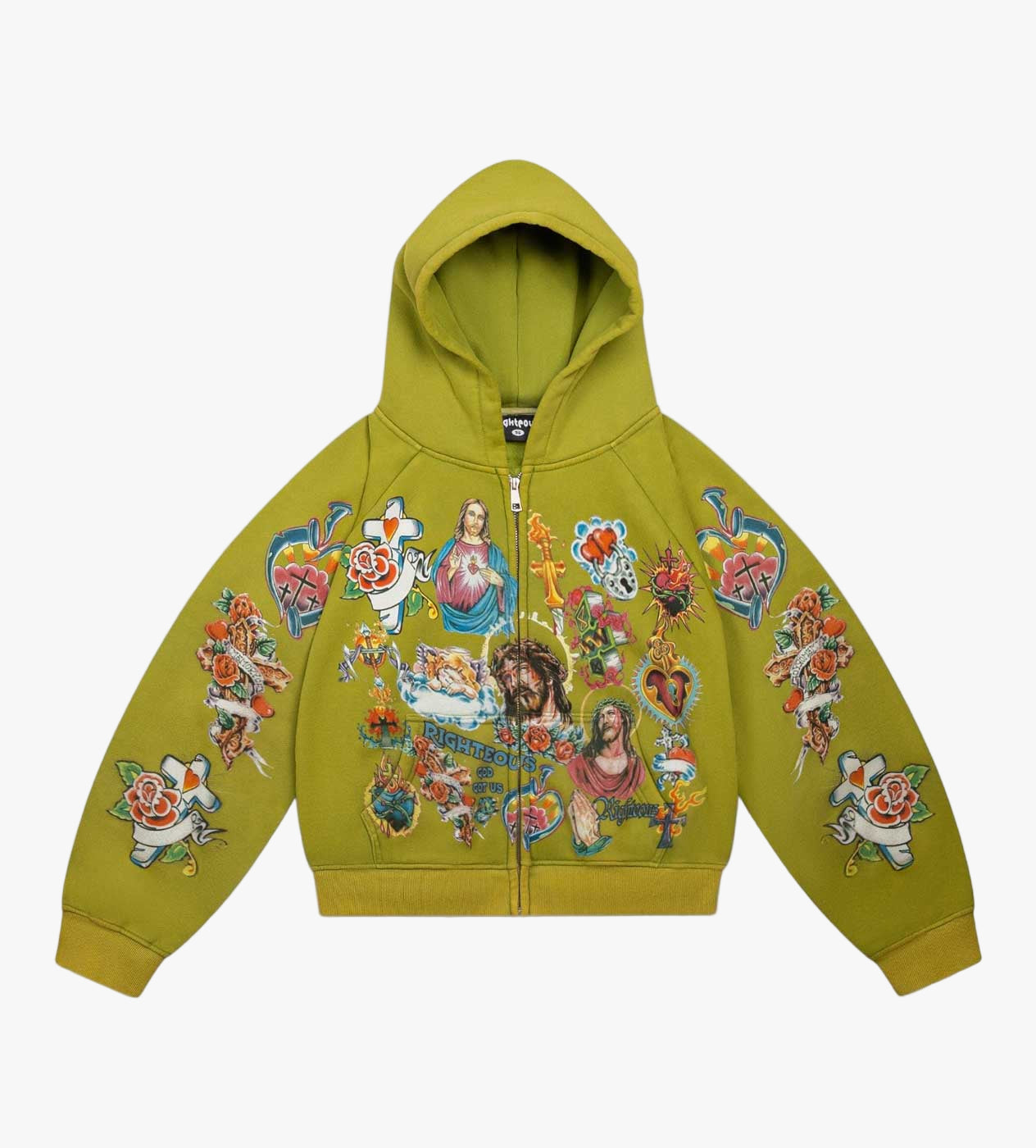
Seeing as Righteous hoodies usually are shaped with extra room through the torso and arms for that classic streetwear drape, sticking with your regular tee size in a hoodie can lead to a surprisingly boxy feel. For those who like a more fitted silhouette, checking the garment’s chest measurement against your own—rather than assuming your usual letter size—guards against a letdown.
Tees act on their own terms. As they use a smaller amount of fabric, and are commonly worn beneath outerwear or layers, a tighter fit is more common in tee sizing charts than in hoodie charts. Depending on how roomy each style is meant to be, someone fitting a large in a Righteous hoodie may find a medium works comfortably in the brand’s tee cuts.
Bottoms contribute a third variable: waist versus hip measurement, plus inseam length. The brand’s joggers and shorts, often include both waist and hip numbers, since a waist-correct fit might still feel snug or baggy at the hip according to your proportions. Comparing both numbers, not just the waist, helps you sidestep an unwelcome surprise.
What Righteous Feedback Tells You About Sizing
Customer feedback is one of the handiest tools when a official size guide alone can’t resolve your specific question. A detailed Righteous review will often mention whether a piece runs true to size, slightly large, or noticeably small, and that real-world context is valuable alongside the official measurements. Repeated observations across many reviews are more reliable than any single comment, since body types and personal fit preferences differ from person to person.
As you go through a We Are Righteous review, note whether the reviewer references their typical size elsewhere and how the Righteous item measured up. A reviewer who says “I’m usually a medium everywhere and this fit true” offers a useful data point, even more so when several other reviewers back up the same takeaway.
It’s also worth noting reviewer height and weight when reviewers share them, since this information add nuance that a flat measurement chart can’t. A fixed chart can’t show that two people with matching chest sizes but different heights might want different hoodie lengths—reviews often bring that nuance to light.
Frequent Sizing Errors to Sidestep in 2026
The most frequent mistake remains skipping the size chart entirely and ordering based on assumption. Even loyal customers who’ve bought from We Are Righteous before should double-check current charts each season, since fits can be refined or adjusted between drops. Fit that was accurate a year ago may change slightly once pattern blocks are revised.
Buyers also stumble into the trap of overlooking garment length while solely reviewing width. A hoodie might feature the right chest dimension but a surprisingly long or short body length, which affects how it sits when styled with various bottoms. Cross-referencing the length number against a piece you already own is a five-minute step that saves you from plenty of regret.
Last but not least, don’t ignore the return and exchange policy before you buy, and rely on it as a safety net rather than avoiding a purchase because you’re worried about getting it wrong. Despite careful measuring, sporadic mismatches crop up, and being aware you have that option takes away needless pressure from every order.
Putting these steps into practice, measuring accurately, reading the specific chart for each item, and checking real customer feedback, turns a potentially frustrating guesswork into a easy decision. Righteous’s clothing rewards this small measure of upfront effort with garments that fit as they were meant to, season after season.